MARINE MAJOR SURVIVES CHINA, KOREA AND VIETNAM ONLY TO FACE A CORPORATE WAR BY FARMERS INSURANCE EXECUTIVES TARGETING HIM AND HIS DAUGHTER, THEIR HOME, PROPERTY, MONEY AND LIVES FOR PERSONAL GAIN
Aggravated Mayhem does not require intent to kill or proof of the cause of death, but it does require intent to cause, and causing of, great bodily harm.
Compensation for illegal performance.
- Treated with fairness and respect for the victim's dignity and privacy.
- Reasonably protected from the accused offender.
- Reasonable, accurate and timely notice of any public court proceeding, or parole proceeding involving the crime, release or escape of accused.
- Present at all public court proceedings related to the offense, unless the court determines testimony by the victim would be materially affected if victim heard other testimony at that proceeding.
- Reasonable right to confer with an attorney for the Government in the case.
- Full and timely restitution as provided by law.
- Reasonably heard at any public proceeding in the district court involving release, plea, sentencing, or any parole proceeding.
- Right to proceedings free from unreasonable delay.
- Victim Rights Federal Law 42 U.S.C. 10606(b)
- Victim & Witness Protection Act (VWPA) of 1982
- Victims of Crime Act of 1984
- Victims Rights and Restitution Act of 1990
- Violent Crime Control & Law Enforcement Act of 1994
- Antiterrorism & Effective Death Penalty Act of 1996
- Victim Rights and Clarification Act of 1997
Claim records prove statutory and policy rights were denied to Margo, and promises by Farmers in national advertising:
1. Right to full timely restitution under policy and settlement
2. Right to proceedings free from unreasonable delay
1. Right to full timely restitution under policy and settlement
2. Right to proceedings free from unreasonable delay
FARMERS INSURANCE INSIDERS DENIED MARGO PROMISED PROTECTION FROM RETALIATION AND HER VICTIM RIGHTS
FARMERS INSURANCE INSIDERS DENIED MARGO PROMISED PROTECTION FROM RETALIATION AND HER VICTIM RIGHTS
1998 & 2002 REPORTS ON INSURANCE BULLIES NATIONWIDE WHO TARGET, DISCRIMINATE AND HARM VULNERABLE WOMEN LIKE MARGO SURVIVING INCEST & VIOLENCE TO NOT PAY LOSSES OWED TO THEM ON APPROVED CLAIMS
Farmers Insurance pays thousands of claims nationwide every day to permit their insureds to return to normal lives before losses. Farmers even promises to right wrongs, like they did when their insured, MARGO, reported insider crimes substantiated by claim records and by two executives, Verl Edwards (in charge of Southern California claims), and David Nicholas (Branch Manager in charge of San Diego claims), who brought with them, two experts in restoration plumbing and construction after sewage and water losses. Edwards apologized and authorized the payment of maximum policy coverages and a settlement agreement to each insured plus interest accrued from the date of their original losses on 8-15-1997 until they are returned to their former home and quality lifestyle, and in Margo's case, through 2014.
Farmers insiders discovered their insured (Margo) was a victim of incest and violence in childhood as they went through her records during pack-out and in storage. They saw this as an opportunity because one of their other insureds (Margaret) did not report these crimes, which led to multiple victims, crimes not prosecuted until a third victim in the family was reported by a teacher in 2001, and the perpetrator prosecuted, making Margaret fearful she would be prosecuted for her complicity and harm to Margo as a child. Farmers used Margaret's fears of prosecution, and brought in to family abusers who were not insured, to help them go after Margo and stop Margo from getting a case in court, and help prosecuting the insider crimes she uncovered and substantiated with records for Edwards and Nicholas.
Nicholas and Edwards did not protect insureds as promised. They disappeared, and those who took their place, refused to let insureds communicate with them by passing on their phone number so they could call them. Instead of paying policy and settlement monies as promised to permit Margo to escape the life threatening dangers they created, Farmers set her up for retaliation from those she reported in confidence, but made sure these individuals knew what records she had that proved what they did to them. They took over Margo's personal property in storage, removed her name from claim records as insured, and as the owner of her personal property, to steal her policy and settlement monies, freedom, rights, security, home, personal property, education and the future she would have had if Farmers did not discriminate and target victims of incest and violence for the personal gain of everyone involved. The goal of those in charge was to use and keep insured vulnerability and losses for personal gain, and eliminated Margo's evidence substantiating their crimes, and threatened to permanently silence her as a witness.
Farmers insiders discovered their insured (Margo) was a victim of incest and violence in childhood as they went through her records during pack-out and in storage. They saw this as an opportunity because one of their other insureds (Margaret) did not report these crimes, which led to multiple victims, crimes not prosecuted until a third victim in the family was reported by a teacher in 2001, and the perpetrator prosecuted, making Margaret fearful she would be prosecuted for her complicity and harm to Margo as a child. Farmers used Margaret's fears of prosecution, and brought in to family abusers who were not insured, to help them go after Margo and stop Margo from getting a case in court, and help prosecuting the insider crimes she uncovered and substantiated with records for Edwards and Nicholas.
Nicholas and Edwards did not protect insureds as promised. They disappeared, and those who took their place, refused to let insureds communicate with them by passing on their phone number so they could call them. Instead of paying policy and settlement monies as promised to permit Margo to escape the life threatening dangers they created, Farmers set her up for retaliation from those she reported in confidence, but made sure these individuals knew what records she had that proved what they did to them. They took over Margo's personal property in storage, removed her name from claim records as insured, and as the owner of her personal property, to steal her policy and settlement monies, freedom, rights, security, home, personal property, education and the future she would have had if Farmers did not discriminate and target victims of incest and violence for the personal gain of everyone involved. The goal of those in charge was to use and keep insured vulnerability and losses for personal gain, and eliminated Margo's evidence substantiating their crimes, and threatened to permanently silence her as a witness.
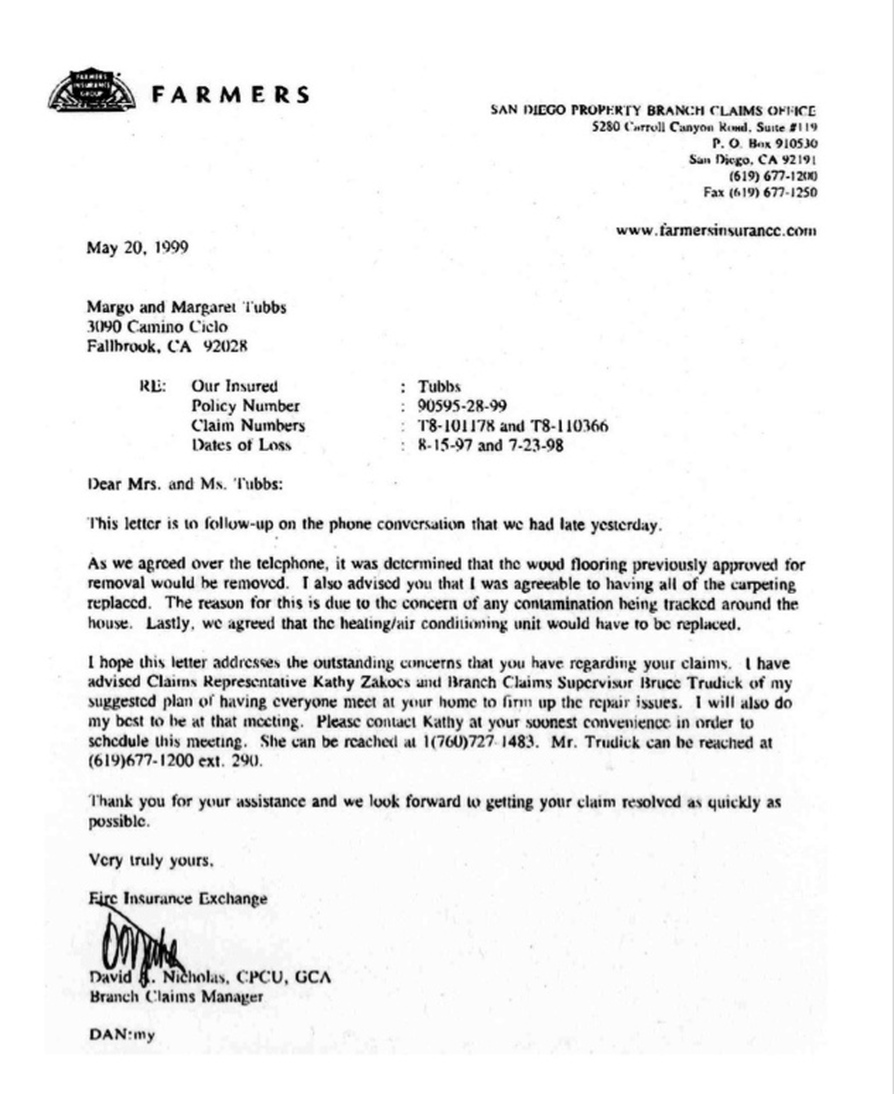
Nicholas (letter below) substantiates 3-years of discrimination, abandonment, and abuse endangering health, welfare and safety.
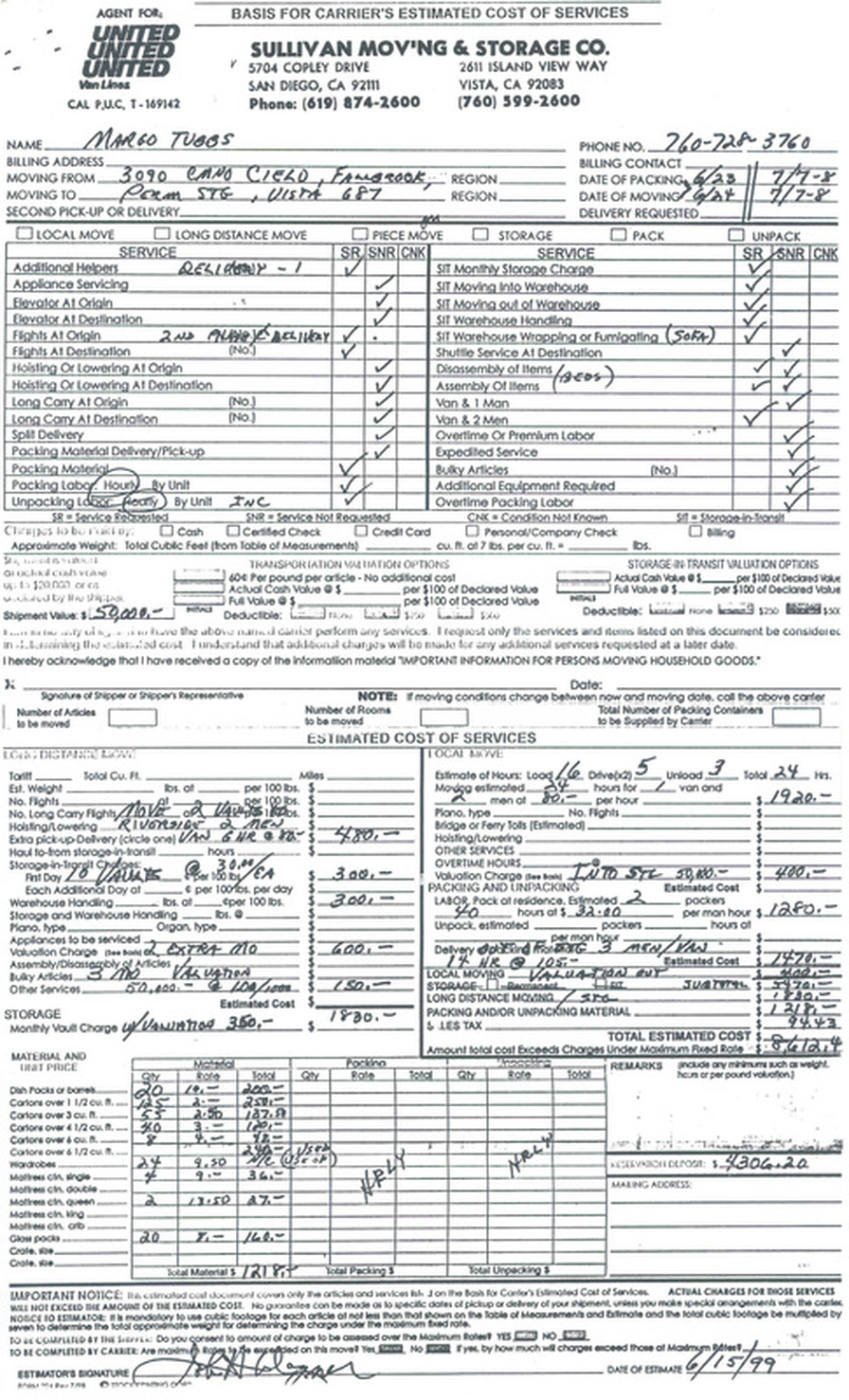
Farmers insured Margo's personal property for $50,000. They inventoried and put in PERMANENT STORAGE to never return it.
Margo substantiated insider crimes to Edwards and Nicholas who promised to protect her from retaliation and restore losses. Letter (below) proves how they secretly controlled her property and never returned it as retaliation despite her requests to do so.
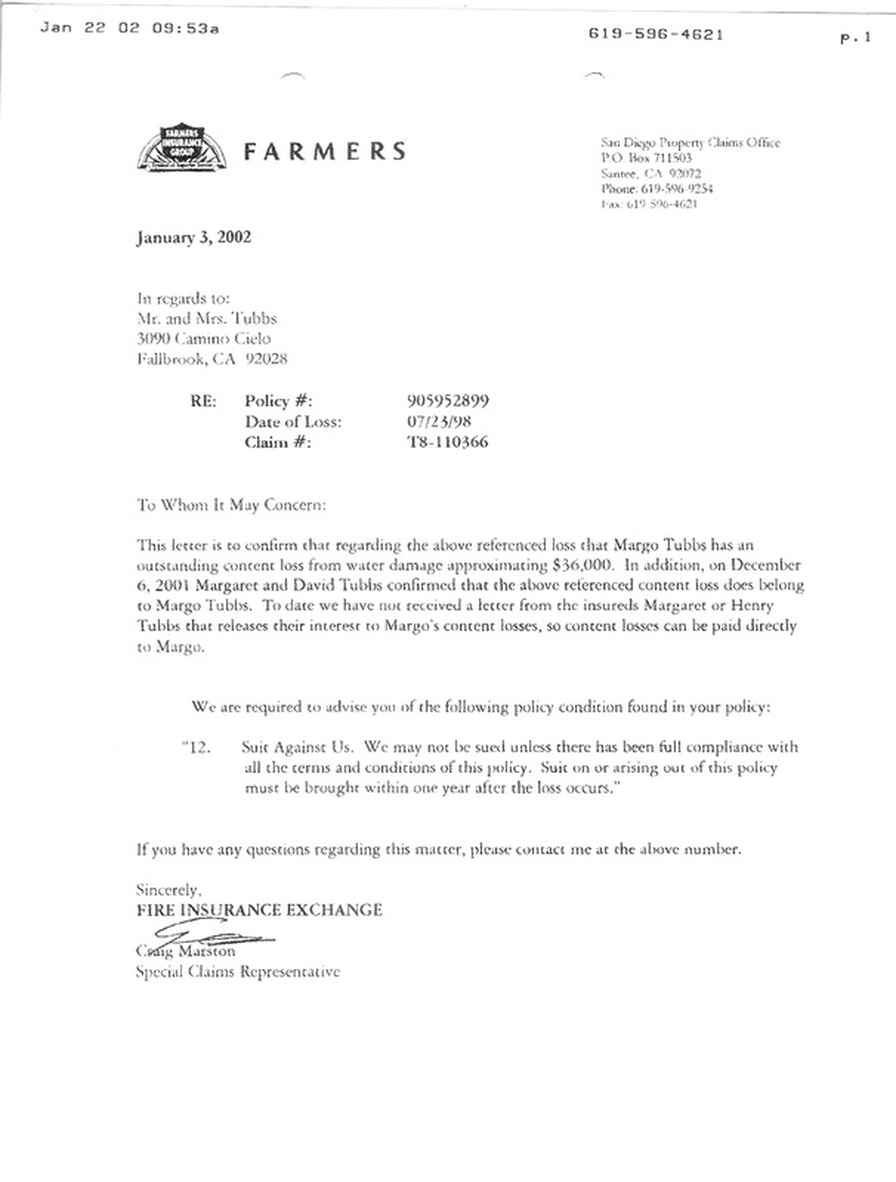
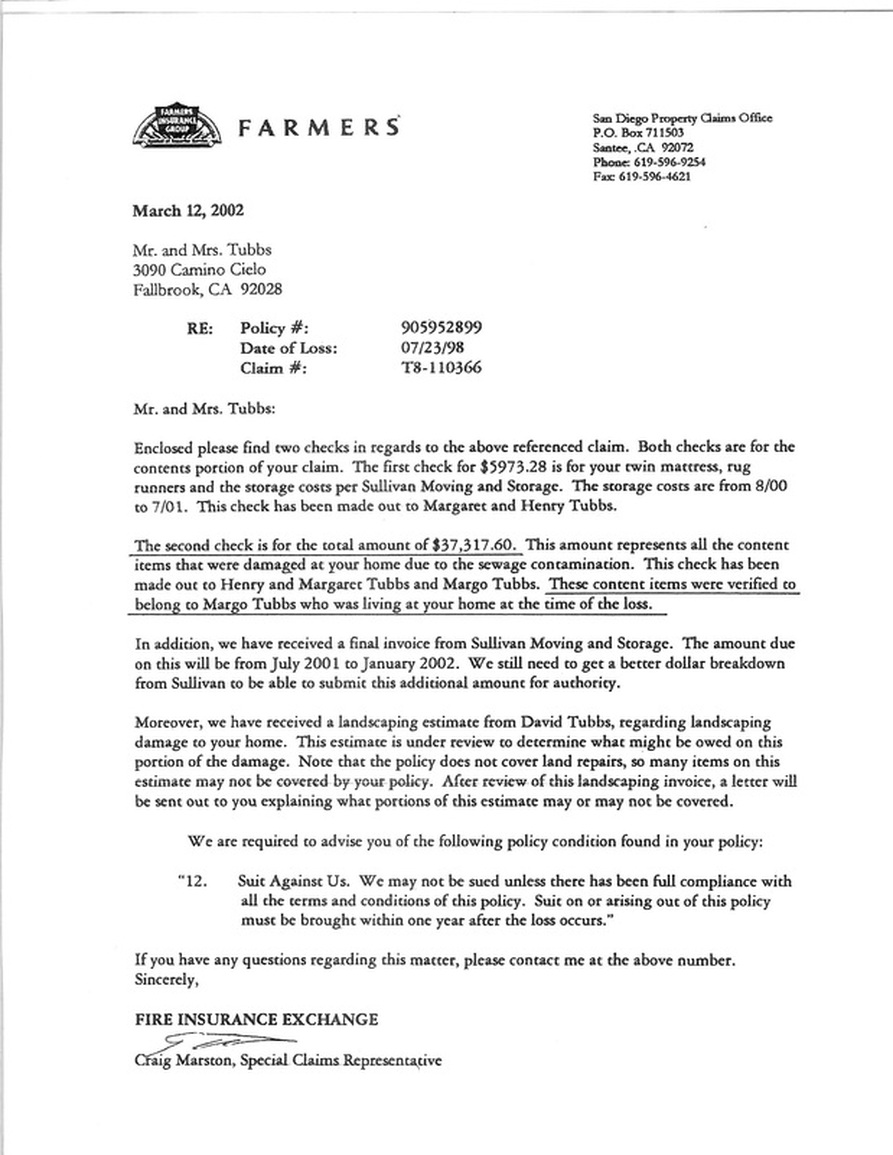
Letter (below) proves Farmers conducted secret meetings with others who were not insured and did not own Margo's personal property, claim and settlement monies. Letter proves retaliation, conspiracy and plans to keep her vulnerable and in deprivation. It also proves discrimination and abuse because this incest victim was denied the rights given others on their claims nationwide.
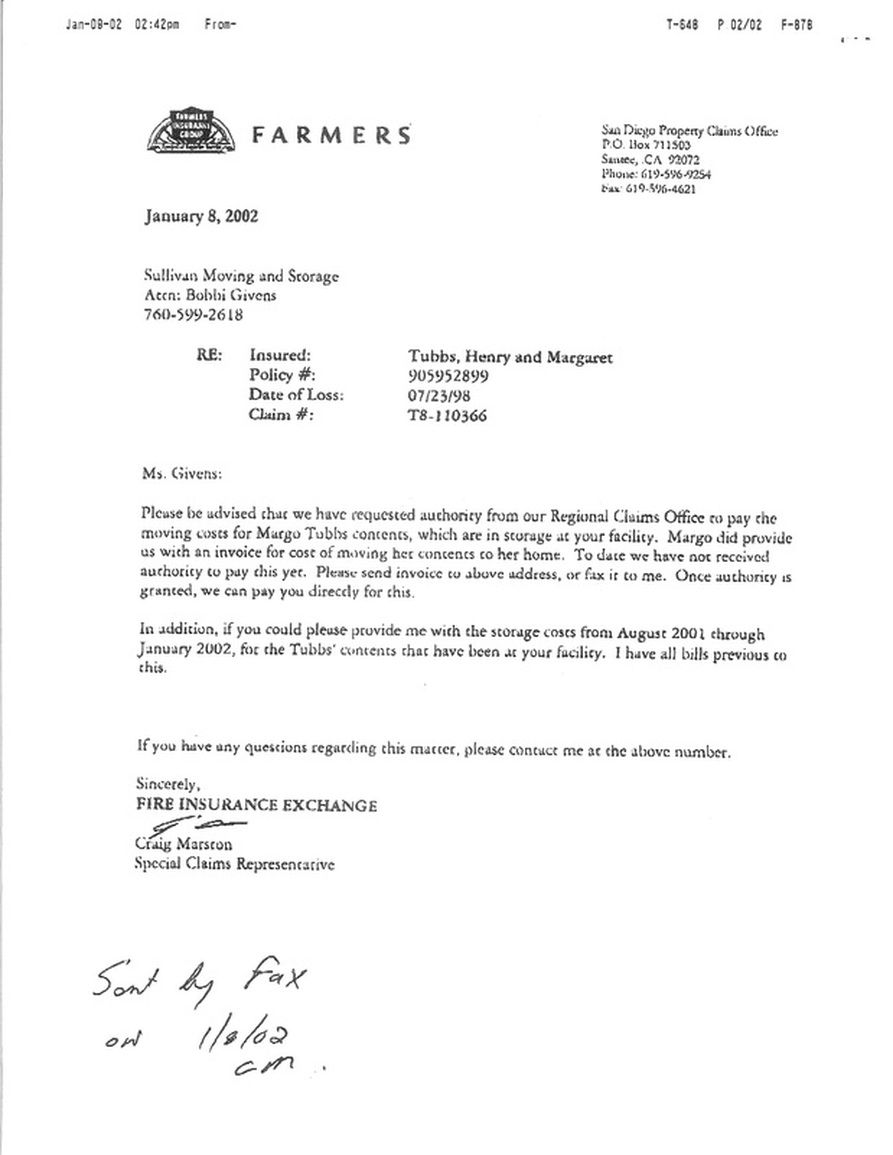
Marston continues retaliation against Margo, and carries out conspiracy to steal claim and settlement monies after their secret meetings, with correspondence confirming how Farmers controls every aspect of her life, and they threw her into the street, and into deprivation to cause her death, and added the names of others to her check to share among those involved after killing her.
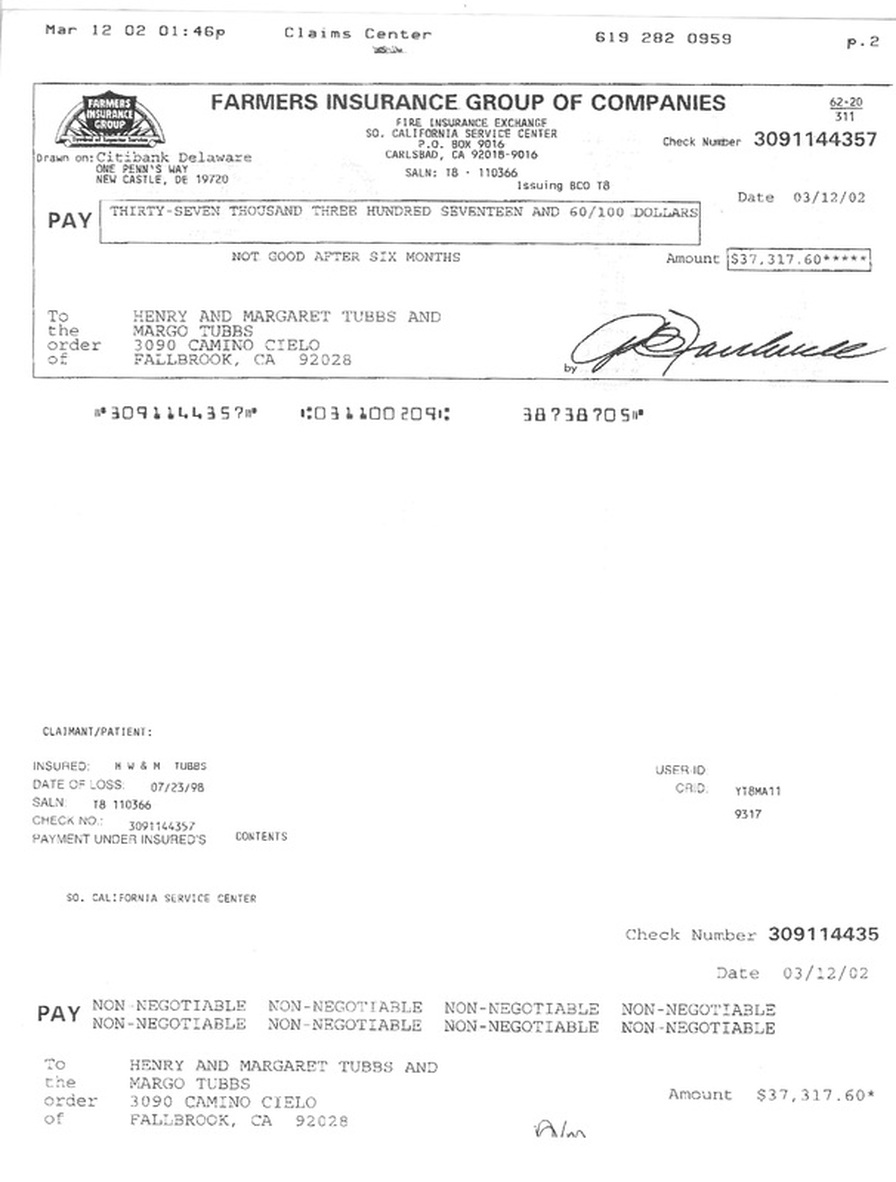
Farmers check send by Marston to others involved in conspiracy with names added, and with ownership transferred to them when she is murdered as threatened. She was thrown in the street in 2001 with no way to survive or provide for herself, and as you can see, they are withholding these monies because they never plan to give them to her but share with those involved. Margaret begins using Margo's name instead of Margaret should they get tired of waiting to be notified regarding Margo's death.
|
What is Insurance Fraud?
The State of California Department of Insurance says: "Fraud occurs when someone knowingly lies to obtain some benefit or advantage to which they are not otherwise entitled or someone knowingly denies some benefit that is due and to which someone is entitled." Depending on the specific issues involved, an alleged wrongful act may be handled as an administrative action by the Department or the Fraud Division may handle it as a criminal matter. Types of Insurance Fraud or Other Crimes Fraud Division Handles The State of California Department of Insurance says: "Fraud Division is charged with enforcing the provisions of Chapter 12 of the California Insurance Code, commonly referred to as the "Insurance Frauds Prevention Act," California Penal Code, Sections 549-550 and California Labor Code, Section 3700.5. Current law requires the Fraud Division to investigate various felony provisions of the Penal and Insurance Codes. Most often, investigations conducted by the Fraud Division involve some aspect of a "Suspected Fraudulent Claim" or other related crimes." Cases investigated by the Fraud Division most often involve criminal acts involving automobile property and personal injury, workers' compensation, health insurance and residential and commercial property claims. Some examples of the types of insurance fraud that are investigated include:
California and federal laws also permit the Fraud Division to pursue its cases federally. In those instances, the crime of "insurance fraud" is usually pursued as "mail fraud," "criminal racketeering" or other federal offenses. Discriminatory practices are highly regulated in the insurance industry and your homeowner’s policy may not be denied, non-renewed, limited or require premium rates based on age, gender, race, color, national origin, religion, marital status, disability or geographic location. Denial must be based solely upon “sound underwriting or actuarial principles” which the insurer can use to provide statistical evidence that your home represents greater risk of a loss than other homes the company agrees to insure. Discrimination against homeowners within a given rate class and regardless of the age or value of your home, although insurers may require wiring, plumbing, heating and air conditioning, and other major components updated before accepting an older home and may give discounts for newer homes assumed to have a lower risk. |
Insurance Fraud
Theft Residential - Residential and personal property damage and theft. Vandalism - Vandalism or malicious mischief to interior or exterior of residence, and to Margo's personal property and vehicle. Residential Fire - Attempts to cause fire damage in insured home. Property Theft from Vehicle - Suspicious theft of personal property while stored in a vehicle (commonly claimed under a homeowner's insurance policy). Executives/Adjustors - Insureds refused copies of their policies and claim records taken from them after their home and personal property losses to stop substantiation of policy and settlement monies promised, owed and not paid. Cover-up and destroying written and video records evidence on losses and expert testimony verifying Farmers Insurance liability for causing insureds new losses and claims, failing to fund and restore approved loss and liability claims. Sewage Water Mold Related - Loss claims caused by sewage, water, mold. Other Property Damage - Property damage not included in other definitions. Embezzlement - Embezzlement of funds, policy, claim, and invoice proceeds. Financial Fraud - Any alleged fraudulent activity (billing fraud, etc.) Unlawful Solicitations/Referral - Farmers Insurance tried to force insureds compliance and involvement in their crimes. Only Margaret Tubbs agreed to do whatever they wanted if they would pay her and let her leave the state, and said she was too old and exhausted to continue struggling for justice and restoration, and that they said she would have to do whatever they said, even harm Margo. Billing Fraud - Farmers Insurance insider criminals threatened insured that she would be thrown into the street and murdered if she did not submit false invoices for funding for those involved in these crimes to share. Insured refused and insider criminals carried out their threats to destroy her life. Identity Theft - Margaret started using Margo's identity and name to help those involved to carry out their insider crimes for personal gain. Disability - Disability claim submitted and accepted against policy by Verl Edwards with claimant forced by Farmers Insurance and those involved in insider crimes to work and perform activities exceeding physical limitations. Organized Ring - Collusion headed and carried out by Farmers Insurance orchestrated and organized to conduct criminal activity with the help and support of their executives, attorneys, adjustors and many others they employed. |
|
California Health and Safety Code Section 1374.75
(a) No health care service plan shall deny, refuse to enroll, refuse to renew, cancel, restrict, or otherwise terminate, exclude, or limit coverage, or charge a different rate for the same coverage, on the basis that the applicant or covered person is, has been, or may be a victim of domestic violence. (b) Nothing in this section shall prevent a health care service plan from underwriting coverage on the basis of the medical condition of an individual so long as the consideration of the condition (1) does not take into account whether such an individual's medical condition was caused by an act of domestic violence, (2) is the same with respect to an applicant or enrollee who is not the subject of domestic violence as with an applicant or enrollee who is the subject of domestic violence, and (3) does not violate any other act, regulation, or rule of law. The fact that an individual is, has been, or may be the subject of domestic violence shall not be considered a medical condition. (c) As used in this section, "domestic violence" means domestic violence, as defined in Section 6211 of the Family Code. |
California Insurance Code §676.9 (1998)
The statute provides that an insurance company cannot limit, deny, refuse renewal of the policy, cancel, or charge different rates pertaining to health insurance for victims of domestic violence. If the policy is denied, or altered for a legitimate reason, then the victim of domestic violence is irrelevant in denying or altering the policy. No insurance company employee may ask questions pertaining to being a victim of domestic violence. The problem with this statute arises the health insurance company’s inability to raise rates of an individual who is a victim of domestic violence which is a higher risk than the initial evaluation. The insurance company may attempt to raise the individual’s rates for a facially legitimate reason with the underlying reason being the individual is a victim of domestic violence. |
Janlori Goldman, JD, R. M. Hudson, MA, JD, Z. Hudson, et al. Health Privacy Principles for Protecting Victims of Domestic Violence (2000)
This article demonstrates the way in which insurance companies were able to attain and use the domestic violence from a person’s medical records. It also explains some concerns that victims of domestic violence have when the abuser provides their insurance and the victim have left the situation. In many instances, the need for medical attention for the victim or children after leaving will go untreated or they will not use the health insurance they have because of the fear that the abuser may find them and begin the cycle again. One area of concern for victims of domestic violence is medical documentation of the abuse. The article explains the importance of documenting the abuse as being an intricate part of treatment which includes being able to diagnose and understand the patients conditions as a part of the abuse. However, the insurance companies have access to the patient’s medical records. Without the legislation specifically protecting the insured victim, the doctor-patient communication may be harmed in order to protect the insurance. |
|
California Insurance Code Section 675
(a) Except as provided in Sections 676.8 and 679.6, this chapter shall apply to policies of insurance, other than automobile insurance and workers' compensation insurance, on risks located or resident in this state which are issued and take effect or which are renewed after the effective date of this chapter and insuring any of the following contingencies: (1) Loss of or damage to real property which is used predominantly for residential purposes and which consists of not more than four dwelling units. (2) Loss of or damage to personal property in which natural persons resident in specifically described real property of the kind described in paragraph (1) have an insurable interest, except personal property used in the conduct of a commercial or industrial enterprise. (3) Legal liability of a natural person or persons for loss of, damage to, or injury to, persons or property, but not including policies primarily insuring risks arising from the conduct of a commercial or industrial enterprise. (b) This chapter shall not be construed so as to modify or negate any of the provisions of Chapter 3 (commencing with Section 330) of Part 1 of Division 1, nor to destroy any rights or remedies therein provided. (c) On and after January 1, 2000, an insurer may not refuse to renew a policy of insurance specified in subdivision (a) solely on the grounds that a claim is pending under the policy. This subdivision is not applicable to claims made under coverage for loss or damage caused by the peril of earthquake as provided in Chapter 8.5 (commencing with Section 10081) or Chapter 8.6 (commencing with Section 10089.5), of Part 1 of Division 2. |
California Insurance Code Section 676.9
(a) This section applies to policies covered by Sections 675 and 675.5. (b) No insurer issuing policies subject to this section shall deny or refuse to accept an application, refuse to insure, refuse to renew, cancel, restrict, or otherwise terminate, or charge a different rate for the same coverage, on the basis that the applicant or insured person is, has been, or may be, a victim of domestic violence. (c) Nothing in this section shall prevent an insurer subject to this section from taking any of the actions set forth in subdivision (b) on the basis of criteria not otherwise made invalid by this section or any other act, regulation, or rule of law. If discrimination by an insurer is not in violation of this section but is based on any other criteria that are allowable by law, the fact that the applicant or insured is, has been, or may be the subject of domestic violence shall be irrelevant. (d) For purposes of this section, information that indicates that a person is, has been, or may be a victim of domestic violence is personal information within the meaning of Article 6.6 (commencing with Section 791) of Chapter 1 of Part 2. (e) No insurer that issues policies subject to this section, and no person employed by or under contract with an insurer that issues policies subject to this section, shall request any information the insurer or person knows or reasonably should know relates to acts of domestic violence or an applicant's or insured's status as a victim of domestic violence, or make use of this information however obtained, except for the limited purpose of complying with legal obligations, verifying a person's claim to be a subject of domestic violence, or cooperating with a victim of domestic violence in seeking protection from domestic violence or facilitating the treatment of a domestic violence-related medical condition. This subdivision does not prohibit an insurer from asking an applicant or insured about a property and casualty claim, even if the claim is related to domestic violence, or from using information thereby obtained in evaluating and carrying out its rights and duties under the policy, to the extent otherwise permitted by this section and other applicable law. (f) As used in this section, "domestic violence" means domestic violence as defined in Section 6211 of the Family Code. |
California Family Code Section 6211
"Domestic violence" is abuse perpetrated against any of the following persons: (a) A spouse or former spouse. (b) A cohabitant or former cohabitant, as defined in Section 6209. (c) A person with whom the respondent is having or has had a dating or engagement relationship. (d) A person with whom the respondent has had a child, where the presumption applies that the male parent is the father of the child of the female parent under the Uniform Parentage Act (Part 3 commencing with Section 7600 of Division 12). (e) A child of a party or a child who is the subject of an action under the Uniform Parentage Act, where the presumption applies that the male parent is the father of the child to be protected. (f) Any other person related by consanguinity or affinity within the second degree. California Insurance Code 10144.2
(a) No disability insurer covering hospital, medical, or surgical expenses shall deny, refuse to insure, refuse to renew, cancel, restrict, or otherwise terminate, exclude, or limit coverage or charge a different rate for the same coverage, on the basis that the applicant or insured person is, has been, or may be a victim of domestic violence. (b) Nothing in this section shall prevent a disability insurer covering hospital, medical, or surgical expenses from underwriting coverage on the basis of the medical condition of an individual so long as the consideration of the condition (1) does not take into account whether such an individual's medical condition was caused by an act of domestic violence, (2) is the same with respect to an applicant or insured who is not the subject of domestic violence as with an applicant or insured who is the subject of domestic violence, and (3) does not violate any other act, regulation, or rule of law. The fact that an individual is, has been, or may be the subject of domestic violence shall not be considered a medical condition. (c) As used in this section, "domestic violence" means domestic violence, as defined in Section 6211 of the Family Code. |
|
California Insurance Code Section 10144.3
(a) No admitted insurer licensed to issue life insurance shall refuse to accept an application for insurance, refuse to issue or renew a policy, cancel a policy, or deny coverage under a policy because the applicant for insurance or any person who is or would be insured is, or has been, a victim of domestic violence. (b) Nothing in this section shall prevent a life insurer from taking any of the actions set forth in subdivision (a) on the basis of criteria not otherwise made invalid by this section or any other act, regulation, or rule of law. If discrimination by a life insurer is not in violation of this section but is based on any other criteria that are allowable by law, the fact that the applicant or insured is, has been, or may be the subject of domestic violence shall be irrelevant. (c) Nothing in this section shall require a life insurer to pay for any loss if that payment is prohibited by Section 533. (d) As used in this section, "domestic violence" means domestic violence as defined in Section 6211 of the Family Code. |
California Insurance Code Section 530
An insurer is liable for a loss of which a peril insured against was the proximate cause, although a peril not contemplated by the contract may have been a remote cause of the loss; but he is not liable for a loss of which the peril insured against was only a remote cause. 531. An insurer is liable: (a) Where the thing insured is rescued from a peril insured against, and which would otherwise have caused a loss, if, in the course of such rescue, the thing is exposed to a peril not insured against, and which permanently deprives the insured of its possession, in whole or in part. (b) If a loss is caused by efforts to rescue the thing insured from a peril insured against. 532. If a peril is specially excepted in a contract of insurance and there is a loss which would not have occurred but for such peril, such loss is thereby excepted even though the immediate cause of the loss was a peril which was not excepted. 533. An insurer is not liable for a loss caused by the willful act of the insured; but he is not exonerated by the negligence of the insured, or of the insured's agents or others. 533.5. (a) No policy of insurance shall provide, or be construed to provide, any coverage or indemnity for the payment of any fine, penalty, or restitution in any criminal action or proceeding or in any action or proceeding brought pursuant to Chapter 5 (commencing with Section 17200) of Part 2 of, or Chapter 1 (commencing with Section 17500) of Part 3 of, Division 7 of the Business and Professions Code by the Attorney General, any district attorney, any city prosecutor, or any county counsel, notwithstanding whether the exclusion or exception regarding this type of coverage or indemnity is expressly stated in the policy. (b) No policy of insurance shall provide, or be construed to provide, any duty to defend, as defined in subdivision (c), any claim in any criminal action or proceeding or in any action or proceeding brought pursuant to Chapter 5 (commencing with Section 17200) of Part 2 of, or Chapter 1 (commencing with Section 17500) of Part 3 of, Division 7 of the Business and Professions Code in which the recovery of a fine, penalty, or restitution is sought by the Attorney General, any district attorney, any city prosecutor, or any county counsel, notwithstanding whether the exclusion or exception regarding the duty to defend this type of claim is expressly stated in the policy. (c) For the purpose of this section, "duty to defend" means the insurer's right or obligation to investigate, contest, defend, control the defense of, compromise, settle, negotiate the compromise or settlement of, or indemnify for the cost of any aspect of defending any claim in any criminal action or proceeding or in any action or proceeding brought pursuant to Chapter 5 (commencing with Section 17200) of Part 2 of, or Chapter 1 (commencing with Section 17500) of Part 3 of, Division 7 of the Business and Professions Code in which the insured expects or contends that (1) the insurer is liable or is potentially liable to make any payment on behalf of the insured or (2) the insurer will provide a defense for a claim even though the insurer is precluded by law from indemnifying that claim. (d) Any provision in a policy of insurance which is in violation of subdivision (a) or (b) is contrary to public policy and void. |
CA Insurance Code Section 791.28
(a) An insurer under a personal lines residential property insurance policy, if it reports the claims history or loss experience of insureds under those policies to an insurance-support organization, shall provide the insured with the following additional disclosure at the time that it provides the disclosure required pursuant to paragraph (1) of subdivision (b) of Section 790.034: "This insurer reports claim information to one or more claims information databases. The claim information is used to furnish loss history reports to insurers. If you are interested in obtaining a report from a claims information database, you may do so by contacting: (Insert the name, toll-free telephone number, and, if applicable, Internet Web site address of each claims information database to which the insurer reports the information covered by this section)" (b) This section shall become operative on July 1, 2006. |